
Anticipatory action is made possible because of improved technology to model different types of risks and because of better-quality forecasts. But just modelling and forecasting risks is not enough. At-risk communities need to be able to take action ahead of crises based on this information.
Those of us working in the field of anticipatory humanitarian action, have a lot to learn from scientist Richard Feynman. Feynman was a Nobel Peace Prize-winning theoretical physicist. Some considered him to be one of the greatest physicists of all time. One of the characteristics of Feynman’s genius was his ability to clearly communicate complex topics to non-expert audiences. In fact, he believed that if you couldn’t explain something fairly simply, you haven’t really understood it at all. Clear thinking and clear presentation were of upmost importance to him.
The concept of anticipatory action is drawing global attention
This work involves delivering support to communities that are at risk of disasters and crises before they strike. Today, the global climate emergency means that risks relating to natural hazards are only going to increase. With the experience of COVID-19 demonstrating the importance of crisis preparedness, interest in this area of work has been steadily growing.
Anticipatory action is made possible because of improved technology to model different types of risks and because of better-quality forecasts. But significant challenges remain. Just modelling and forecasting risks is not enough. At-risk communities need to be able to take action based on this information.
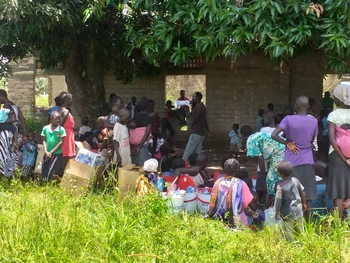
Through Start Network, I have watched humanitarian decision-makers release funding on the basis of a forecast to implement projects that intend to mitigate possible humanitarian impacts. These decisions take confidence and courage. They require a deep understanding of a risk—enough understanding to take a risk yourself and act. But it is local communities who ultimately have the most vested interest in acting or not acting on a risk. It is these communities who are often the first responders to a humanitarian crisis, and they will also bear the impacts of that crisis most acutely.
This is why risk information must be developed with at-risk communities in the driving seat. But in reality, this is rarely the case.
Many scientists and academics genuinely want their models and forecasts to have a real-world impact, and there is increasing pressure on academic institutions from funders to demonstrate this. Many humanitarians also want their organisations to be able to act on the basis of a forecast to implement projects to mitigate risks. But there is still a huge divide between these communities. Different terminology and a lack of funding are both contributing to this divide. Detrimentally, there are also very few actors bringing humanitarians, forecast information providers, and at-risk people around the same table to tackle this problem together.
In 2019, Start Network commissioned a piece of research, which has helped us to understand the opportunities and barriers related to how humanitarian organisations and at-risk people use risk information in order to act ahead of crises. The research pointed to the need for more political commitment, and both financial and human resources to communicate and contextualise risk information to make it accessible to at-risk people. Donors should prioritise partnerships that seek to build national forecast capabilities and better connect climate risk information services to at-risk groups. Humanitarian actors like Start Network must prioritise connecting at-risk people to forecasting information and focus on impact-based forecasting.
Although significant challenges remain, there are some promising and momentous steps being taken.
The newly formed Risk Informed Early Action Partnership (REAP) brings together an unprecedented range of stakeholders across the climate, humanitarian, and development communities with the aim of making 1 billion people safer from disaster by 2025. It is promising to see that REAP has a focus on encouraging governments to invest in early warning system infrastructure to bring forecast information to at-risk communities. REAP wants to see these early warning systems become more people-centred enabling action in advance of hazards to be implemented at the scale required.
At Start Network, we have been challenging ourselves to work across the humanitarian/academic divide to provide risk information that is more user-friendly. We do this through groups called FOREWARN based in Madagascar, the Philippines, and Bangladesh. These groups comprise local and international NGOs, other humanitarian agencies, and academics. We want to improve forecasting, helping our members and at-risk communities to access quality forecast information so they can act ahead of risks.
Working across different fields isn’t easy. And ensuring that communities at the local level have the risk information that they need remains a considerable task ahead of us. Yet ultimately, risk information has very little benefit if it is not disseminated, relevant, or utilised by at-risk communities to make appropriate responses. For those of us in the sphere of anticipatory action, our ability to bridge the divide between forecast information providers, humanitarians, and at-risk communities will determine the quality and scale of our work.
Read Information is Power: Connecting Local Responders to the Risk Information that they Need
Download link is available above.