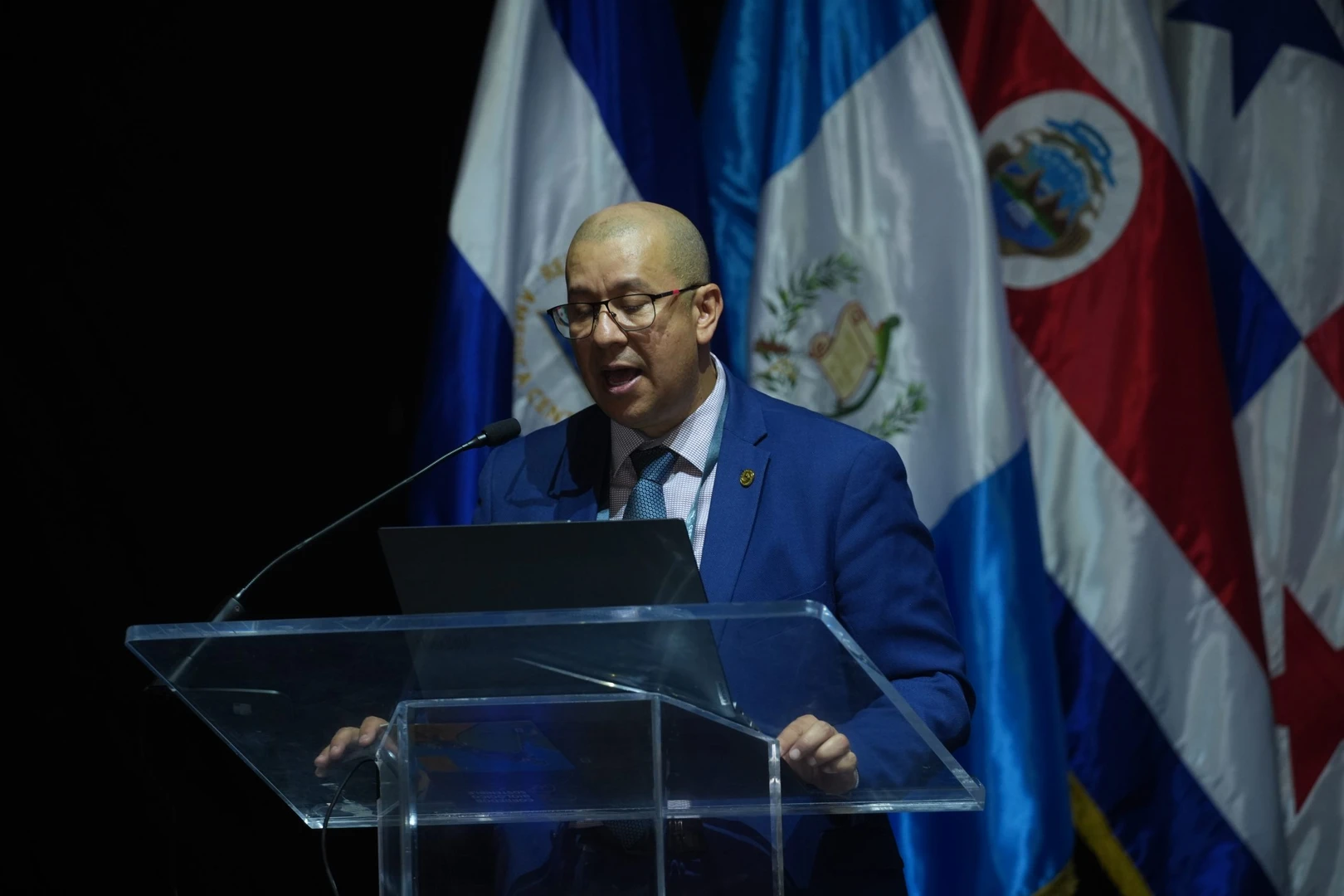
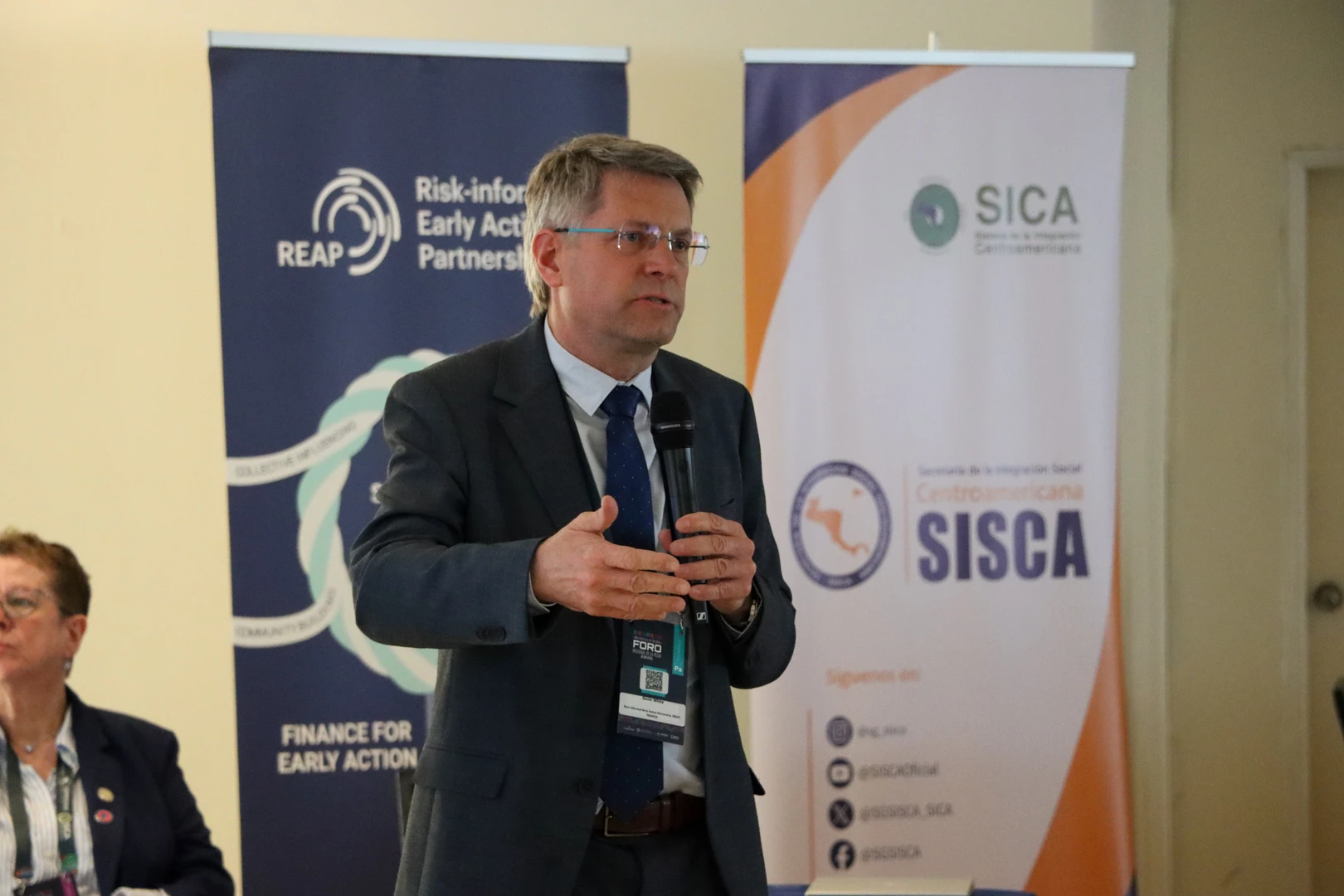
Since 2022, CEPREDENAC has been a partner of REAP, to strengthen the ability of Central American countries to disseminate early warnings and implement early action measures. Building on this collaboration, the REAP Secretariat actively participated in the VIII Foro Consultivo Regional de la Política Centroamericana de Gestión Integral de Riesgo de Desastres (PCGIR, engl. VIII Regional Advisory Forum of the Central American Policy on Integrated Disaster Risk Management), organized by CEPREDENAC in Panama from 17-19 March 2026. Guided by the REAP Strategy 2030, CEPREDENAC and REAP focused their joint efforts at the conference on advancing anticipatory action – including expanding its reach, improving quality, and involving new stakeholders – bolstering synergies across key initiatives supporting the early warning and early action value chain, and fostering dialogue to better connect social protection systems with early action protocols.
This collaboration is particularly significant as it advances REAP’s core objective of ensuring that early warnings translate into early action for the most vulnerable communities. The recent Forum, held in Panama City, marked a pivotal step in institutionalizing regional, national, and local leadership for early warning and early action. By securing a commitment to operationalize anticipatory action with assigned budgets and to strengthen multi‑hazard early warning systems, the event moved the region from conceptual alignment to concrete implementation.
“This VIII Consultative Forum of the PCGIR called on us to move from commitment to action, using this space to build concrete solutions that integrate risk management into development and prioritize the protection of the most vulnerable populations. This entails strengthening cooperation to institutionalize more effective early warning systems and anticipatory action mechanisms that enable us to act before risk materializes. Reducing disaster risk is not only about responding better, but about anticipating, preventing, and safeguarding development gains, avoiding the loss of lives, livelihoods, and development opportunities,” said Alejandro Picado, Pro Tempore President of CEPREDENAC.
“Resilience in Action”-Declaration creates political momentum
The Forum produced an ambitious "Declaration titled "Resilience in Action" which outlines specific pathways for the region. Key commitments include strengthening multi‑hazard early warning systems by integrating essential climate and hydrometeorological services as a regional standard. The Declaration also calls for regulatory adjustments that recognize climate change as a risk multiplier and for the delineation of clear mandates between environmental, water, and disaster management authorities. Furthermore, the region has committed to implementing a regional strategy for early warning systems that integrates scientific knowledge with local wisdom and human rights approaches. A critical milestone is the move toward institutionalizing anticipatory action, a process closey supported by the Anticipation Hub, which involves defining end‑to‑end protocols and linking action triggers to financial protection mechanisms. These steps ensure that early warnings are not just alerts but catalysts for immediate protection.
The Risk-informed Early Action Partnership was also represented via the active involvement of Partners and leading Anticipatory Action actors, in addition to the Anticipation Hub, Food and Agriculture Organization (FAO), International Federation of Red Cross and Red Crescent Societies (IFRC), NORCAP, part of the Norwegian Refugee Council (NRC), and World Food Programme (WFP) this outcome is a great example of collaboration.
Concrete steps will keep the momentum
Building on this momentum, CEPREDENAC will facilitate upcoming regional working groups to translate these commitments into actionable roadmaps. The organization will lead the coordination of methodological guidance and the harmonization of frameworks that connect anticipatory action with social protection systems. This continued engagement ensures that the progress made at the Forum translates into sustained capacity building and improved outcomes for communities across the Central American Integration System (SICA) region (Costa Rica, El Salvador, Guatemala, Honduras, Nicaragua, Panama, and the Dominican Republic).
A Partnership for risk-informed early action
This progress directly supports the systemic shift toward risk‑informed decision‑making and aligns with the global policy coherence necessary to mainstream early action into the 2030 Agenda and is fully aligned with REAP’s 2030 Strategy.
“REAP is proud to have CEPREDENAC as a partner and support its vital work. The commitment shown by Central American countries to operationalize anticipatory action and strengthen early warning systems is a powerful example of how regional cooperation can drive real change. By turning these ambitious declarations into funded, actionable strategies, we are taking a decisive step toward a safer and more resilient future for all,” said Dr. Catalina Jaime, Head of the REAP Secretariat.
About CEPREDENAC
Centro de Coordinación para la Prevención de los Desastres en América Central (CEPREDENAC, engl. Coordination Center for the Prevention of Disasters in Central America), the coordinating body for disaster prevention in Central America, serves as the technical and political hub for the region’s disaster risk management efforts. It brings together the national disaster management institutions of the Central American Integration System (SICA) member states (Costa Rica, El Salvador, Guatemala, Honduras, Nicaragua, Panama, and the Dominican Republic) to foster regional integration, policy alignment, and coordinated action. With a mandate to strengthen national and regional capacities, CEPREDENAC plays a critical role in bridging the gap between high‑level policy and on‑the‑ground implementation.